Показват се публикациите с етикет light. Показване на всички публикации

вторник, 19 юли 2016 г.

Lesson 2 - Shooting on a budget

If you love photography but you cannot afford to buy all the gear,  here is something that might help. I've tried most of the things so I will try to show in practice how some of the things work.
Image taken from http://addicted2success.com/success-advice/9-ways-you-can-make-money-online-with-photography/

I know you've been waiting for quite a while to get this but it's been a busy time. So I hope you like this one. 


Before we start - a disclaimer. 

If you are not prepared to invest in photography,  better find another hobby that speaks to you. It's not only money we're talking about - it's time, passion,  creativity. You can come up with amazing images using any gear,  it just takes some tweaking and more time to get the good results.


1. Keep your compact camera - cost 0€/£/$


What many people do after they buy their first DSLR is sell away the good old compact camera they have used before. My advice is - keep it!  Not only because it has served you well and doesn't deserve to be thrown away. You know how it functions and you know how to use it.
I will really try not to compare a compact camera and a DSLR but I can't help listing a few things. If you want to read the whole comparison - click here.

Even though the quality of compact camera shots cannot match the editing capacity of the ones produced by a DSLR, if you know what you're doing,  few would be able to tell the difference.  

Besides,  compact cameras (especially if they are equipped with good optical zoom) can be a good replacement for almost any lens you lack.  
One of my best images from Pisa - shot with a compact camera I still keep in my bag
A compact can give you the necessary zoom if you don't have a telephoto lens or it can give you the closeup you need to get that bee in shot without a macro lens. 
Compacts have one big advantage to DSLRs - well,  maybe except mirrorless cameras but judging by the amount of money they cost - no thanks - the size.  A compact is ideal if you need a video and don't have a tripod or if you need that amazing moment captured without drawing too much attention.

This wonderful view of some greenhouses was shot from a moving car - the compact enabled me to shoot handheld without needing that much firm and steady ground (because as you know roads are not always totally smooth) 
I managed to snap this street artist only because I used a compact and he didn't notice me.

Another shot from the compact - then toned on the computer
The best thing is that you don't need to pay a single coin for it - you already have it at your fingertips.  The only problem is that you'll need some time and patience to get the great results that would have taken you a few seconds with a dedicated lens.


2. Extenders and filters - cost around 200 €/£/$


You will need to pay a bit here - not much though. Extenders are those lovely things that make your kit lens a macro or (frankly I don't know what else but I'm sure that there are other options). 
As for filters - the biggest advantage is that they protect the lens from dust,  dirt,  water and - if you pay a bit more for a good quality one - from hits and falls.
One of my favourite images and actually a bestseller is shot with macro filters 
I almost always use this image as an illustration but it's just so good for this that I can't resist this time. Here the point is that it was really light around the waterfall - the ND 8 filter enabled me to use slow shutter speed - around 1/20 or less (can't remember right now) and so I achieved the blurry flowing water. Unfortunately, I didn't have a tripod so that's as slow as I could go.
A filter can transform the image and it's lightweight and cheap. You can,  of course add it in post-production but it's better to have it.


3. Colored and white paper ( and some colored clothing) - the ideal background for objects and food - cost around 50 €/£/$ (with some clothes included)


That one is shot on a blouse - I've never worn it, by the way, but it turned out to be perfect for object photography
Women are quite rich in clothes they have bought and never worn or worn only once and you can find white paper for printers in almost any house.  It may sound odd but these are perfect if you want to imitate a studio setting and you don't have the money to hire one or buy the expensive professional backgrounds.  
This one is taken on a wooden board 

Looks really nice, doesn't it - well, originally it is pijamas

Of course,  you'll need to tweak a corner or two on the computer but it would be worth it.  
Truth be told,  some of my best pictures are created with clothes for backdrop.


4. Use your house - cost 0€/£/$ 

You don't need a fancy studio to get amazing shots. Yes, you do some space but you already HAVE space - your home. No matter how big or small it is, you have a clean wall (or a big wardrobe), a window and a table. If you want to learn the basics of studio photography, that's all you need. After all, the hardest light to master is the sun. 

This one is made on a chair in the kitchen - all props coming directly from the kitchen - and using the only light available - the sun from the window


5. Ask friends for help - cost 0-10€/£/$ 

There's no need to do everything yourself. Tell others about your passion and they'll be more than willing to help. Props, space, advice about the best places to visit, even models - everyone can help with something. Most of them will do it even if you don't ask for help straight away. So don't be shy - it will be worth it. Besides, once you tell more people, you'll get more exposure. 

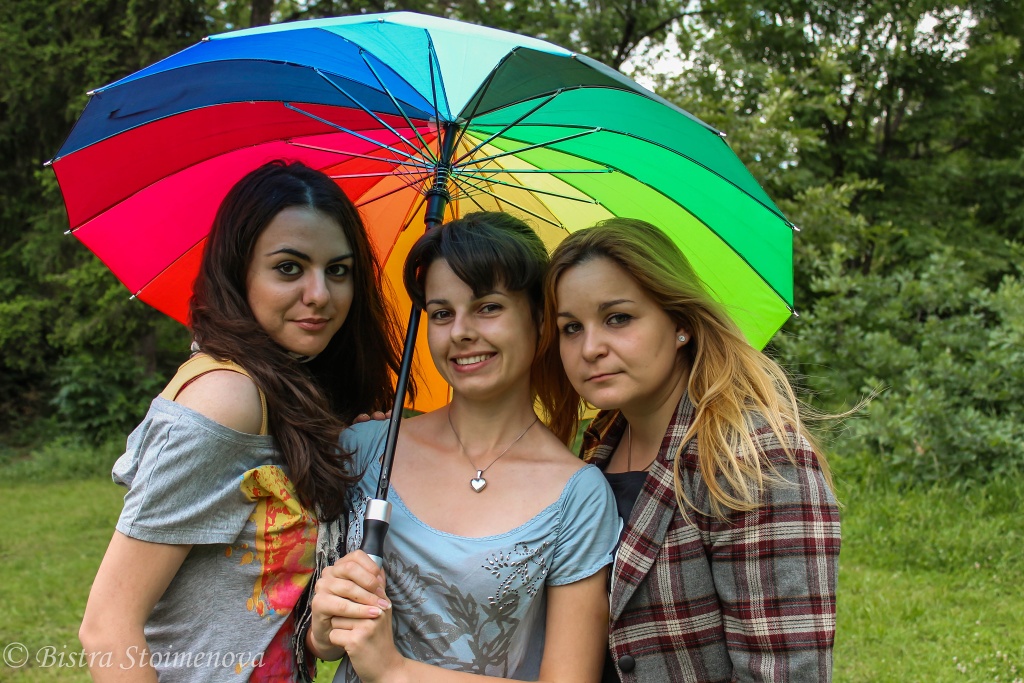
The girls on both images are colleagues of mine from the university - I asked them to make a photo shoot in the park and they were more than happy to come along. The umbrella belongs to one of them, by the way. So the only thing you need to do afterwards is to give the people some of the images - so that they help you out next time.

6. Borrow things - cost depends on how good a friend is the person and how you treat the thing. 

You want to try out that lens or you just need that reflector but you don't have them around? No problem if you know the right people - if you get into some Facebook groups you might find some people that are ahead of you and that are willing to help. You just have to ask - even if they turn you down, you would have tried.

If they give you the object, though, you'll have to treat it well and return it in the condition you got it.

These are not the only ways to improve your work without spending a lot of money. You know - when there's a passion, there's a way! 

понеделник, 2 май 2016 г.

Meteora - where Man meets God

Meteora... Does the name ring a bell??? For most people it doesn't but this jewel of Greece has to get known to more people and in this travelogue I'm gonna tell you about it. 

It's Easter time so it's only natural that I will be talking about a Holy place - a few are as spectacular as Meteora! 

The story starts the previous day - as usual - when we arrived at Kalabaka...  
OK, you have no idea where that is...

Where is Meteora?

Meteora is situated in central Greece - in Thessaly, if that rings a bell. The nearest big town is Trikala and the nearest small town is Kalabaka (transliterated as KalaMbaka in Greek roadsigns but you read only the B sound because the orthographic combination of the MP letters is read as B in Greek). Anyway, Meteora is in the middle of the continental part of the country, near one of the highest mountain ranges - Pindus Mountains. 

Here is where Meteora is on the map.
Image taken from http://www.greeceathensaegeaninfo.com/destinations_greece_meteora_kalambaka.htm
How to get there?

There are - as always - two ways. Both, however, involve having a car. There are great motorways up till Trikala and then there is a good first-class road that leads to Kalabaka. Meteora is roughly 350 km away. If you come from some other country - like Bulgaria - it is less (because it is closer to the border.) In any case, you'll need a car to go round the place. Once you get there, there are some hiking tours and loads of things to do but still - if you ask me - don't underestimate the car. 
The road to Kalabaka - notice the lights - they go on for kilometers
What is Meteora?

In Greek, Μετέωρα means "middle of the sky", "suspended in the air" or "in the heavens above". The Greeks gave that name to the place because of its unique look. The name stands for a unique rock formation in the plain of Thessaly. The sandstone pillars, as they are called, show that at some point of its geological history, that part of Greece was below sea level. 
Some of the stone pillars
The same idea, "suspended in the air" or "in the heavens above", goes for the complex of monasteries build on top of some of the pillars. They look like birds nests from below and really, you start wondering how did they make them in the first place. 


The answer is - with baskets and a lot of ropes. Everything that is up the stone pillars now was brought up in a basket - brick by brick, stone by stone. 
The ropes that lead up to Agios Nikolaos monastery - now used to hoard in supplies
The place looks surreal and no wonder that it was a favorite place of hermit monks as early as the 9th century AD. They lived in caves inside the pillars and the predecessors of the monasteries were built in the 12th century. The biggest monastery of the complex, The Great Meteoron, was founded in the 14th century. At that time, the Ottoman Turks invaded the area so the rock pillars proved to be the ideal hiding place for the hermit monks. They built more than 20 monasteries up the pillars but only 6 remain today. 


The monasteries


The six monasteries of Meteora are spectacular to see but you cannot visit them all in one day. The reason? They are not open all at once. Meteora has a website where you can check what's the current situation but here it is once more (if you are lazy enough not to click on the link above)
THIS IS THE SUMMER TIMETABLE (April 1st to October 31st) (there is a winter one as well, so check out the webiste)

St. Stephen's Nunnery

Visiting Hours: 9:00 to 13:30 and 15:30 to 17:30.
The monastery stays closed on Mondays.

Great Meteoron Monastery

Visiting Hours: 09:00 to 17:00.
The monastery stays closed on Tuesdays.

Roussanou Monastery

Visiting Hours: 09:00 to 17:45.
The monastery stays closed on Wednesdays.

Holy Trinity Monastery

Visiting Hours: 09:00 to 17:00.
The monastery stays closed on Thursdays.

Varlaam Monastery

Visiting Hours: 09:00 to 16:00.
The monastery stays closed on Fridays.

St. Nikolaos Anapafsas Monastery

Visiting Hours: 09:00 to 15:30.
The monastery stays closed on Fridays.

From the list above - you have 2 monasteries closed on Friday and one each other day of the work week. If you go on Saturday and Sunday - you will see the monasteries open but you will not be the only visitor. Meteora is very popular in Greece (and virtually unknown outside it) so expect a lot of tourists. Moreover, Meteora is part of UNESCO World Heritage list so there are even more tourists.
Hint: they usually visit places at noon, so they are relatively easy to avoid.  


Agios Nikolaos church from the outside - while you are forbidden to take pictures inside the church, you can do so outside
What I highly recommend is getting a place to sleep in Kastraki (the nearest village to the monasteries) or Kalabaka (the bigger town) and then spend two days there and see all monasteries. Thus, if the weather is bad you have one more day to sort things out. 

All monasteries are currently in use so you are NOT entering a museum - keep in mind that photos INSIDE THE CHURCH are STRICTLY FORBIDDEN and you should be dressed properly - some info for the ladies - even if you wear jeans and not shorts, you'll be given a skirt - Greek Orthodox Church rule - if you are a female, you enter church in a skirt. No exceptions (only little girls are allowed to enter in jeans and the rest). 

For more information on how to behave in Orthodox churches and monasteries, see this post:

Rila Monastery - the biggest monastery on the Balkan peninsula part 1 Or - general rules for visiting Eastern Orthodox churches and monasteries

Now that you have been warned, you know what to expect inside. 

My visit to the monasteries

Map of the monasteries - we started from Agios Nikolaos - the closet to Kastraki
Image taken from http://pravoslavieto.com/poklonnichestvo/gr/meteora/index.htm
Meteora had been on the list for quite some time but, since it is relatively close to Bulgaria, I always left it for some later time. When I finally included it in the list, it was a tough call. Last item on the sightseeing list, and even that - we had to cross half of continental Greece (traveling from Delfi) and arrive in Kastraki in the evening. Then, the next morning up till noon was reserved for visiting some of the monasteries and then - off we go to Bulgaria. 

As you can see, visiting all the monasteries, even if we had actually come during the weekend, was out of the question. 

I had been to Meteora when I was 11 and then we visited St. Stephen's Nunnery, Great Meteoron Monastery, and one more which escapes my mind right now. Thus, I think that I can give you some additional info about each of the monasteries: 


St. Stephen's Nunnery

Biggest nunnery at Meteora - the other nunnery, Roussanouq is much smaller. The monastery is close to the Great Meteoron and it is easily accessible by car but when I was 11 they didn't let people go further than the yard. You can visit the church of course, but not much more. I don't remember it having any view - or if it had, we didn't see it. 

Great Meteoron Monastery
Agios Nikolaos, Varlaam and probably the Great Meteoron (it is somewhat behind Varlaam so I'm not sure which one is visible in the picture). All viewed from Rousssanou
The biggest monastery at Meteora and if you ask me, the one touched by commercial industry the most. It has  abig museum of Meteora and its surroundings and overall - since it is really big - you get the impression that you are really visiting a museum and not a real monastery. On the other hand, if it is open for visitors, you should definitely see it since it's the only place where you can see a monastery from the inside - some of the living quarters of the monks and common halls included. Besides, in the museum you'll find out more about the history of the place - which I am too lazy to write in here are well.  All other monasteries in the complex are much smaller and the living quarters are closed to visitors. The view is great - even from the parking lots. Oh, I forgot to mention - all monasteries have parkings around them - not big but enough - the road that goes around the monasteries is neither narrow nor wide so keep traffic in mind when you park (and keep tourist buses in mind!!!) 


Roussanou Monastery

Small nunnery with amazing view to Great Meteoron, St.Stephen's nunnery and Varlaaam. You get up there by stairs (not too many don't worry) and the monastery itself is a small and cozy one. In all monasteries you can buy some souvenirs (usually handmade and sold by the monks and nuns - the older don't speak much English but they will sort you out) but the biggest variety is, as usual, in the Great Meteoron. Roussanou is deffinitely worth the visit and if you visit some of the three above (Great Meteoron, St.Stephen's nunnery and Varlaaam) try to capture Rousssanou from there - it is a spectacular view - a small monastery at the summit of a stone pillar. 
The garden at Roussanou - the monastery can be shot from Varlaam or the Great Meteoron - it is impossible to take a pictutre of it from the road because it's not visible
Varlaam Monastery


Varlaaam as seen from Roussanou
It's in the middle of the rock formations so from it you have view to all other monasteries. It is relatively big and quite visited by tourists - mainly because of the amazing view. Definitely a must-see if it is open! Even if it is not - stop at the parking and take a picture of it - you won't regret it. 


Varlaaam from the road - couldn't stop there so I had to shoot while the car was moving


St. Nikolaos Anapafsas Monastery
Agios Nikolaos from the road - and if you take a closer look - through the car window
The smallest of all monasteries. If you ask me, this one is the most authentic one. By far, it is on the lowest stone pillar and the view towards Kalabaka and Kastraki is great. Agios Nikolaos is the closest to Kastraki. It has a small parking and usually big tourist groups bypass it. It is really small (I mean REALLY) and you can get up there by climbing quite a lot of stairs but the climb is worth it. Agios Nikolaos is the only monastery where you can still see the old basket-and-rope structures that were used to build Meteora and to bring up supplies. 


Well, it's a bit modernized, bu still. You can get the overall impression, especially if you imagine that happening with one of the higher pillars. 

Holy Trinity Monastery

Haven't been there yet, can't tell much about it.  I think it is a nunnery but I'm not sure...

No matter which monastery you visit, take a time and buy a candle - thus you respect the place and use the time to say a prayer or two - no need to be a devout Christian to do so - just wish for good health and happiness, that's enough. 

Advice - choose a place with a view - Meteora is amazing at sunset and at night! Kalabaka or better still - Kastraki, are the wisest choices, if you ask me.

After saying all that, here is a bit of advice:


Clothing


  • In that part of Greece, it is generally hot in the summer. That goes only for the day, at night it can be rather chilly so - bring a jacket (you'll thank me later). Meteora is quite rainy and misty in spring and autumn so keep that in mind. Jeans and a T-shirt would do. Remember what I said here about how to dress in Orthodox churches and monasteries. I know I'm getting kind of boring with that but if you visit such a place, you should show some respect. 
Some of the stairs towards Agios Nikolaos
  • Bring comfortable shoes (I mean really COMFORTABLE) - sneakers would do.
  • It is quite windy up on the pillars so if you bring a hat - hold on to it.

Camera gear, settings and other tips


There is no way of going to Meteora and returning without nice pictures. The place is just so amazing that you will capture at least a few things that are stunning. Here are a few things to keep in mind. 


View from Agios Nikolaos - used the wide angle lens for that
Gear to take

There would be climbing so don't take all your lenses with you. 
You'll need:

  • a wide angle (10-18mm or less)
  • a general non-telephoto (17/18-55mm will do, if you have something better - bring it on)
  • a tripod!!! (priceless for shooting sunset and night pics)
Meteora at night - exposure -  around 5 minutes. That's why you need a tripod! 
  • something to clean up your gear - you have no idea how messy it gets when wind starts blowing
  • a lot of memory cards - especially if you shoot in RAW format
  • remote trigger - for the night and sunset shots (if you have a compact camera, you'll only need a portable tripod and will have to use the )
  • anything else would help but it is not mandatory

Camera settings

To get amazing pictures you'll need a closed big f/ number (around and above f/8 - I recommend f/16)

Keep shutter speed at at least 1/200 sec. - that way camera shake will not be a problem.

Keep an eye on the light and avoid shooting when the sun shines in your lens - unless you have a DSLR and shoot in RAW format you won't be able to see much in them.
Keep ISO as low as possible (you'll thank me later about that). 


Light

Meteora is amazing to shoot at the Golden Hour ( around 10 am and around 4 or 5 pm in summer). Morning is good but only for some locations, same goes for evening.  Keep in mind that there will be areas that are bright in the sunlight and others that will be in the shadow - that goes especially for the summits of the stone pillars. The only way to get them well-lit is to visit Meteora when it rains or it is about to rain. 


Meteora in the mprning as seen from Kastraki - as you can see - the light comes from behind the pillars
Traveling info

Meteora is in Central Greece so people there are different from what you will encounter in Peloponnese or Crete. The traditional hospitality is still there but people tend to be less 'open' and more like the people in Bulgaria (which means - frowning and not exactly hospitable). This is a personal opinion - which may be due to the fact that I visited the place in a cold and rainy evening in September. Still, the food is great (as anywhere in Greece) - try the local wine and the meat - you'll see few types of fish here but the rest is delicious. 
Bring in a torch - streets of Kastraki do have some lamps but they are not enough - it all depends on where you'e staying. Bring in an umbrella as well - you never know when it's going to rain there. 

Having said all that, I wish you a wonderful Easter and can't wait so see your pictures from Meteora! 

понеделник, 18 април 2016 г.

Belogradchik rocks - chasing the light - sneak peek

This is just a sneak peek of what I've been up to lately - hunting the perfect landscape shot. Belogradchik rock formations are one of the most spectacular places in Bulgaria - really, the view is amazing! Problem is that the light can be quite a false friend there. So in the following excerpt you'll read about my ordeals with the lighting there.

I promise to write a full-length travelogue and tell you all about it some time soon.

About the place:

Belogradchik rocks in the late afternoon.
It is a sandstone rock formation in the Northwest of Bulgaria. In Roman times, the rocks housed a garrison that used to guard the border and it had been so up till 19th century. Now the main part of the formation (from which I took the picture - I promise to post a shot of that soon) is still called Kaleto (the word for 'fortress in Turkish').
The rocks are to be included in UNESCO world heritage sites - there is a procedure under way.

Entrance:

You cannot stay inside after 6 pm - the fortress gets locked so there is no way to capture a sunset inside without getting a permit first. Same goes for sunrise. It's full of people - it's a very popular tourist destination, after all - so you don't have the time for a tripod or some tweaky long exposure tricks. Besides, the top of the formation is not that big so you don't have much space to move around either.

This is my second visit to the place. You have no idea how difficult it is to get the right light there - even if you go at noon, the rocks would be black against the sky. So I went in the late afternoon and made sure it's a cloudy day. Still the result is not ideal so I guess I'll have to go a third time :) This time I'll make sure that the weather forecast says it's going to rain.
Entrance fee is 6 leva, last group goes in at 7pm (you can even listen to a tour guide but you have to pay some extra money - if you don't - as I did - been there too many times to listen to one and the same story all over again, besides - it was the pictures I was concentrated on - you can roam around freely and enjoy the view.). Outside the fortress you can buy some amazing local wine - totally recommend it!

Technicalities:

I used a wide angle lens (10 -18mm) and still had problems with filling the scenery into the frame. Besides, I could only see the images through the viefinder - the sun was shining in the LCD so I shot on autopilot - taking as many pictures as I could. Of course - since I knew that I'll need post processing - I used RAW format.

Wishing you a wonderful week!

вторник, 12 април 2016 г.

Lesson 3 - the colour in things - White Balance


Image taken from http://stylopics.com/tag/tumblr-photography/

Welcome to lesson 3 where we are going to let the hardware be and go a bit into software instead. I know you had to wait fro quite a long time to read that and I hope that it's worth the wait.

By now you already know important is to set the correct aperture and shutter speed to get a good exposure in order to get a good shot. Here we are going to talk about another 'minor detail' that can ruin things if you are not careful. That's white balance. 

By now you probably wonder what white balance is and why do we have to care about it. can whiteness can be balanced? Isn't white supposed to be only white? Yes and no. White balance stands for the way your camera sees the light regardless of what you see. It has to do with the computer inside the camera - remember that I mentioned that in the beginning? So that computer processes the shot BEFORE it gets recorded. Thus the light that to us may have no colour gets one in the picture.
So white balance matters -  it's name comes from the way the white colour changes when you adjust the different settings. Most people learn that setting first. Some never get past that post. If you are wondering right now if you have used the feature or not - look below. if any of those icons looks familiar - you already have.

Image taken from http://www.geofflawrence.com/white_balance.html

If you don't know where are they in the camera menu - take a look at the picture below:


When you click there you'll see this:
Image taken from http://blog.uniquephoto.com/quick-tip-how-to-set-custom-white-balance-on-a-canon-dslr/


So - here's the catch - the difference between those is measured in COLOUR TEMPERATURE - usually in degrees Kelvin -  THE SMALLER THE NUMBER THE REDISH IT ALL LOOKS. Check out the table below to see what I mean: 

Image taken from https://romangronkowski.wordpress.com/2014/10/22/white-balance-and-colour-temperature/

So we care about the colour temperature when we take pictures because if we do not select the right one - it will affect the way the whole picture looks like - and exposure will not correct things. Imagine it as an in-built Photoshop that works on your image before you can correct things. If you are not careful - you can get the whole thing wrong.


Image taken from http://www.fotozzoom.com/blog/top-10-photography-mistakes-avoid-beginners/


With some modes and some situations things are OK but sometimes you can get the whole picture looking red or blue or orange, Some photographers use it as a creative device (for example when you shoot a sunset you will want to get it as colourful as possible so you select a mode that would give you rich reds and oranges) but as a rule if you are a novice - TRY TO USE THE MOST NATURAL-LOOKING MODE.  You'll need to switch between modes a bit but in time you'll know what to use when you see the object.

Do you feel knowledgeable already?

събота, 12 март 2016 г.

The photographic license - how the camera changes the behavior

I don't know if you have ever been in such a situation but it happens to me quite often when I get the 'big' 'professional' camera with me and head out shooting. Somehow when people notice you with that equipment, they seem to be more tolerant to what you do and even try to help. I called this 'the photographic license'

Image taken from http://www.picturecorrect.com/tips/what-are-stops-in-digital-camera-settings/ 


If you have studied literature, you probably know that there is such thing called 'the poetic license' that enables the poet to do whatever atrocities they like to the language - use nonce-words, revert word order etc. I discovered that the same (or almost the same) goes for photography.
As if there is something magical in the equipment and for some reason it makes people take you seriously.

I had this case when I wanted to go shooting at the German Weihnachtsmarkt at the center of town. So far so good, but at the moment I had only my old and favourite compact red Canon PowerShot with me. I went no matter what because I felt that I have to - it is a gut feeling. Guess what - I was snapping away but people did everything to make my life hard - got in my way, bumped into me, intruded in the shots or - didn't notice that I exist.

I managed to get some amazing shots that evening - no matter what. The picture below is one of my favourite Christmas pictures ever and maybe one of the best Christmas moments I have ever captured. Unfortunately I never got to know the woman or the child - they went away without even noticing me.
  
The next evening I came back with the 'real' gear - black 'professional' camera and all. Guess what happened? Everyone stepped out of my way, practically no one bumped into me and when people saw me - they backed out of the way and even tried to help me arrange the thing I wanted captured.


I've seen that at travel locations as well - people tend to pay more attention to you when you carry a big, Terminator-like black 'professional' camera than if you carry a compact one - even though you are one and the same person anyway. I will keep writing professional in inverted commas because I think that the professional is the person behind the camera and the equipment alone cannot make you  a pro. That is a topic of another post, however. 

That had me thinking - why does it happen? Why people behave that way? Is it me or is it the gear? 
That led to another question- does my behavior differ when I get the big camera on? 

The answer came one evening on location (Sighisoara, Romania, by the way  - promise to tell it all in a travelogue) and was confirmed when I had to shoot at one or two events. I am generally not a shy person (well, not an introvert, at least) so that came as a shock to me at first. I noticed that the moment I hide behind the lens I become bolder and am willing to do things I would probably never do without the camera in front of me - like asking a complete stranger at a fair to pose for the camera and if you can photography their goods, to walk around a town in the late afternoon when there is no one around and it actually gets scary because the area is so remote and you are a foreign girl 165 centimeters tall. That camera makes me go and hang over a 80-meter bridge or climbing a rickety coast guard viewpoint or go into the bushes and the sand (despite the chance of finding a snake or a scorpion) for the one and only purpose of getting the right shot. 


The viewpoint I was talking about. From that angle you can see that it is not exactly vertical...


An accidental shot I took while almost falling off the viewpoint. Turned out that it is not used for a reason. Saw that picture wile flipping through the photos at home.
But there came another question - I did the same when I had a smaller camera. Why didn't people take me seriously then? The answer, I guess, lies in the gear. The bigger and scary/professional -looking it is, the more people start thinking 'Hey, look at her - she MUST be a pro, let's get out of the way!' or if they don't like getting photographed 'Oh, is that a photographer over there? She must be - look at her camera and stuff... I must get out of here before she takes a picture of me!'

So, in a way, people do license you with their behavior and you are free to act as you like. I normally use the moment to get better access to the location - if that is possible - or to get a photo of someone or something I like. When I have a camera in hand I am prepared to do almost any kind of idiocy to get the right shot. (and believe me - I have a few idiotic stories to tell come to think of it). With a camera in hand, there are no language barriers.  

So, what do you think?
Is there a photographic license and does holding a camera change you or the people around you?