Показват се публикациите с етикет photos. Показване на всички публикации

неделя, 19 януари 2020 г.

New Year, New Plans


Hey everyone! 
I know the blog has been dormant for quite some time BUT I promise to change things in 2020. 

This post should have appeared a month ago, but for objective reasons, the new year for me starts a month later. For starters, I would like to thank everyone for taking your time to be by my side throughout this difficult period. Thank you and for continuing to follow me on my journey in the world of photography!

Last year I started with some pretty serious plans and I have to admit that 2019 was packed with a lot of events (most of them were quite interesting, with one or two horrid exceptions). A lot of things happened (such as becoming a Master of Arts in the field of Photography and getting my degree in Cultural Studies), I visited many places (for some I have shared some info, for others - not yet). However, there were plans that could not move out of the drawing board (I am only one person, after all, and the day is only 24 hours).

So now is the time to share what I intend to do this year.

In 2019 Culture Crossroads was left in the background (not because I don't have something to share, but because I was pretty busy creating the images on location) so in 2020 I'll try to have more things to appear like on the page, and also on the blog and website of the project. About that, a little later.

The first and largest of the new things is my modification to the 365 day photo challenge. Since I doubt being able to take pictures absolutely every day in the new year, I invented something different.

There is another option of the photo challenge where one shot should be done every week, a total of 52 images. However, this was seemed too restricting to me, so I created the 52 week triple challenge.

The idea is that every week there will be three alternative topics and depending on my opportunity to shoot, there will be between one and three photos, depending on my mood and inspiration that week.

The list of topics can be downloaded from my website in case anyone wants to join :) I will announce the topics each Monday and whoever wishes can share their images in a comment under the post. Photos will also be posted on my blog as well as on Instagram.

Ironically, last year the challenge ended exactly in week 5 (because my busy schedule became even busier). Therefore, this year, we will start straight from week 5 :)

Another change is that more photos and videos will appear on the Culture Crossroads project page - both videos from the places and behind-the-scenes footage. However, to be able to see those in due time, you will have to follow the project page and my YouTube channel.

I have planned a series of videos for this page, this time for the fieldwork in travel photography, as this genre takes out a huge part of my time. As usual, there will be options in Bulgarian and English :) I hope you'll like it :) Generally, this was the plan last year, but obviously I will do this one so now's the time.

The second project is linked to Dmitry Glukhovsky's Subway Series (Metro 2033, Metro 2034 and Metro 2035, in case anyone is interested). More about that when the project starts. There will be lots of pictures again and a lot of work to be done.
The Title? Metro 2020 :)

Finally, I am currently developing a mini photo project that is directly linked to shooting places from old photos. The Target? Old Sofia. Whoever managed to visit my exhibition in may 2019 has already seen some of the images, but I plan to keep going. For the fans and followers of the page, I will start sharing the images I already have :) The project video presentation can be found here.

I wish all of you a 2020 filled with much success health and smiles!

сряда, 30 януари 2019 г.

Week 4 - themes

Here are the topics for week 4 - all of them exciting:
a) the colour BLUE
b) city lights
c) from a high angle

Week 3 - result

What does a photographer do when there's a bunch of stuff to write? Right, stupid things - in my case, it's editing the photos from week 3.

I chose two topics - bottoms up and guilty pleasure and here are the results.

"Bottoms up" is a still life of empty cups, and "guilty pleasure" ( I was tempted to publish only one pic - the one with the cups) is the eating of dried sausages, famous all over the Balkans with the name 'lukanka' or 'lukanika'. It is made out of various types of meat and spices and then put to dry and eaten as a side dish with bread and alcoholic beverages such as 'rakiya'. I love lukanka. A lot. So I decided to make a tasty shot of my favorite appetizer.


понеделник, 21 януари 2019 г.

Week 3 - topics

Due to brutally awful Internet connection these days (of which fans from Bulgaria are already aware and had the chance to laugh a lot), I can upload the topics for this week only now.

Week 3:
a) the colour RED
b) drink up
c) guilty pleasure

The pictures from last week - later today.

Week 2 - themes

Week 2 of the challenge is live and here are the themes :)

a) Morning

b) Made with love

c) Clouds

I don't know about you but this sounds a lot easier than the previous topics.

Looking forward to seeing your amazing images.

Wishing you a week full of inspiration.

сряда, 2 януари 2019 г.

Week 1 topics

Hello everyone!

Here is the first set of topics for week 1. Are you excited? I am. 

So, here they are: 

a) Who are you? Self-portrait. 

b) Resolution 

c) New beginning

Choose any of the topics and share the pictures with me. I'll be glad to have a chat with you and will share my own results in subsequent posts :) 

Wishing you a wonderful week :) 

2019 plans

Hello, hello everyone!
I promised an explanation post and here it is:

The beginning of the new year is a perfect moment to share my plans for the next 12 months to come.

2019 seems to be full of emotions and new projects that I will share with you when the time comes. Naturally Culture Crossroads continues to gain momentum and through the new 2019 there will be many new images and more videos. About that, a little later.

The first and biggest of the new projects I am undertaking is my own modification of the 365-Day Photography Challenge. Since I doubt I can take pictures absolutely every single day of the new year, I did something different.

There is another option of the photo challenge where you should take one pic per week, a total of 52. However, this has seen too little, so I created 52-week triple challenge.

The idea is that every week there will be three alternative topics and depending on my shedule there will be between one and three photos per week (concerning that challenge, I mean).

The list of topics can be downloaded from my website, in case anyone wants to join :) (will let you know when the content is live on my site and blog) and at the beginning of every week I will announce the topics here so whoever wishes to can share their images in a comment under the post. Photos will also be published on my blog and Instagram.

Another change is that on the Culture Crossroads project page there will be more photos and videos - both videos from places I visited and behind-the-scenes footage. To keep track of that, however, you will have to follow the project page and my YouTube channel.

This page there will also be loaded with a new series of videos, this time for the fieldwork in travel photography, as this genre takes a huge part of my time hence I claim to have some expertise there. As usual, there videos in both Bulgarian and English :) I hope you'll like it :)

The second project is linked to the subway series of Dmitry Glukhovsky (Metro 2033, Metro 2034 and Metro 2035, in case anyone is interested). But for when it starts. There will be a lot of pictures again and a lot of fieldwork.

Finally, I am currently developing a mini photo project that is directly linked to shooting places from old photos. The Target? Old Sofia. Expect video presentation of the project as soon as possible!

I wish all of you a 2019 filled with much success health and smiles!

52-week triple challenge

Hello, hello everyone!
The new year is already here and for starters I would like to thank everyone for continuing to follow me on my journey in the world of photography!
Don't worry, this blog is far from dead! I will revive it within the upcoming weeks, I promise :)
I have some exciting new plans for 2019 (that will be in a follow-up post, though). This one is for another purpose. 

Welcome to my own modification of the 365-Day Photography Challenge! 

The idea is that every week there will be three alternative topics and depending on my schedule there will be between one and three photos per week. Created this since I thought that the 365-day photo challenge will be too tough whereas the simple 52-week challenge will be too easy. Hence

The list of topics can be downloaded as a PDF file, in case anyone wants to join :) (will let you know when the content is live on my site and blog) and at the beginning of every week I will announce the topics here so whoever wishes to can share their images in a comment under the post. Photos will also be published on my blog and Instagram.

Interested and want to give it a try?

Then go to the dedicated page (link for convenience) to download the list :) 

Will keep you updated about the progress both here and on my social media accounts :) so stay tuned :) 

Wishing you a wonderful New 2019! 

четвъртък, 10 август 2017 г.

Photographer ≠ a single profession

When I was at high school, I was hopeless at Physics. Nothing could make me understand the equations or memorize the formulas.

Later on, when I took up photography, I found out that contrary to all logic (and most of my preferences) it is all Physics. Light angles, reflections, lenses, mirrors. What was not logic, was technical staff (I was never a tech-bimbo but I've never been a sys-admin either). So, willy-nilly, I learned about Physics and camera parts, how they work together and so on.

Later still, I discovered that being a photographer mean much more than randomly snapping at things around you.

So, I decided to compile a list of all the things a photographer has to do (that photographer is me, by the way) for all those who think taking a picture is a piece of cake and that sums up being a photographer.

You need to know:
  • some information about the thing: ideally the historical, cultural and anthropological background of the place - that includes having MORE THAN BASIC idea of archeology, architecture, warfare, social and cultural history, ethnic groups and the list goes on and on and on.
  • some social skills - to talk to people and make them pose for you or even to get some information from them.
  • camera equipment handling - this means knowing your gear inside out and being able to work with it with your eyes closed. Plus, you are expected to work and 'be fluent' in more than one brand and its specifics - I've had to use five different brands. You need to know about lenses, tripods, filters and so on and so forth.
  • posing 
  • event shooting and how to behave at that time
  • lighting (studio lighting, I mean)
  • your rights and the laws about copyright, private property and photography of the respective country - so that you don't get into trouble.
  • some social networking skills (Facebook and Instagram at least) and SEO (search engine optimization) in order to promote your work.
  • sales and marketing skills to get yourself some clients.
  • html codes - because at some point you'll need a website
  • blogging to tell your story to the world.
  • graphic design - because of the two above and the demands of your clients
  • post-processing (on more than one type software)
  • videography and video retouching
  • sound editing (because you never know)
  • licensing and copyright - so that you know which kind of license you lent whom, why and for how long. I mention it again, but it differs in different countries
  • printing, color spaces and different materials - this is separate because it is a whole domain in post-production
  • networking - you never know who will be useful for what
  • presentation skills - for obvious reasons such as portfolio display
  • first aid and basic survival skills - everything can happen on location and you need to keep yourself and the people around you safe
  • writing - you'll need to write at least the titles of your images and that is not always easy
  • basic self-defense - which includes a lot of common sense and self preservation instinct
  • basic meteorology - to know which weather causes what and how to handle that.
This list can go for a long time and I intend to update it. Point is, that unlike most people who get a single profession, specialize for it at university for some time and then go on working in that field without having to learn new things which have nothing to do with their domain, photographers have to do that all the time.

Photography means much more than just clicking a shutter.

четвъртък, 13 юли 2017 г.

What's in a name? Who is a professional photographer?

I didn't call myself photographer when I started out. In fact, it took me years to even think of myself as one. I remember one of the first times when I was impressed by the way 'professionals' behaved: it was on that memorable trip to Crete.

Actually, it was on the Acropolis in Athens - then, I remember, it was crowded with photographers using gear of all kinds. They were all standing at one and the same spot - where the best view is. I went up there and was amazed that all those 'pros' with 'big black professional cameras' made room for me and even showed me the place where I can photograph the best view. That was the first time I noticed something like that.
One of the images I created back then. I have some amazing images from Crete BUT these are not one of the great ones. As you can see the weather was nowhere near spectacular and nothing looks interesting on the pic. Still, I was able to do this only BECAUSE the pros made some room for me and my compact camera.
When I got my DSLR, I still didn't call myself a photographer. To outsiders, seeing the big black thing, it was absolutely obvious that I WAS, in fact, a professional (why else, carry that heavy scary thing around?). When asked, I said 'yes' laughing. It took me 3 years to really start claiming with confidence that, yes, I am a photographer. A professional. And it took me another year to start demanding the respect owed to such.
These days I have to edit some images created by a colleague - I call him a colleague BUT he still calls himself a 'hobby-photographer'. Truth is that the guy does photo-shoots with models and so on BUT he is still reluctant to state (especially to me) that he is a professional photographer.  Still, since we happened to work together for some time - he has an eye for people shots.

That's me - one of the images that colleague of mine created while we worked together.
This made me think - who has, after all, the right to call himself/herself a photographer? So I decided to conduct a bit of research.

The first place I went to is the website of the association of professional photographers in Bulgaria (link to their website can be found at the end of this post), where it is said that a professional photographer is:

A) getting more than half of his/her income from photography

B) studying photography as a degree at some university or college

Still, I think that this is not enough to define the whole process of calling oneself a 'pro' - I've met countless people who have a BA in photography but are terrible at it. This doesn't make them 'professionals'. I've also met wonderful talents that take pictures in their spare time and are better than most 'pros'. There is something mystical in the whole idea of calling oneself a photographer - as if that gives you some kind of mystical, even mythical status of 'the person who creates masterpieces with one click of the camera'.

So I decided to search the net and see what the great minds of the past have to say about photography. I searched through various quotes about photography but couldn't find a single one about 'professional' photography said by the famous photographers of the past. Somehow these people didn't think that you need to earn this and this and that to call oneself a photographer. You need to see the world in a certain way, you need the 'eye for detail'.

Money comes when there is talent. If there is talent or people who are willing to pay. Or both. Being a professional in what you do comes BEFORE getting money for it, that's what I think. Somehow the photographers of the past have seen it, unlike us, who try to divide into groups: pros and amateurs, those having a degree and those who are self-taught, even to landscapers and wedding photographers.

A degree can only hone the skills you already have but it alone will not make you a professional photographer. Talent alone will help you create something no one else has done (or just very few have thought of doing) but without the knowledge it would take a lot of time (trust me, I know that).

Being a professional is a feeling, a state of mind, not a degree. It takes some time (and some bravery) to state it out loud.

References:

https://petapixel.com/2014/03/11/50-photography-quotes-inspire/ 

https://petapixel.com/2014/05/29/70-inspirational-quotes-photographers/


четвъртък, 22 декември 2016 г.

Merry Christmas and Happy New Year!

Christmas is coming! New Year follows!

Wishing you a prosperous, happy new year, full of adventures, amazing moments with your loved ones and... because we are all interested in photography - a lot of great images!

вторник, 19 юли 2016 г.

Lesson 2 - Shooting on a budget

If you love photography but you cannot afford to buy all the gear,  here is something that might help. I've tried most of the things so I will try to show in practice how some of the things work.
Image taken from http://addicted2success.com/success-advice/9-ways-you-can-make-money-online-with-photography/

I know you've been waiting for quite a while to get this but it's been a busy time. So I hope you like this one. 


Before we start - a disclaimer. 

If you are not prepared to invest in photography,  better find another hobby that speaks to you. It's not only money we're talking about - it's time, passion,  creativity. You can come up with amazing images using any gear,  it just takes some tweaking and more time to get the good results.


1. Keep your compact camera - cost 0€/£/$


What many people do after they buy their first DSLR is sell away the good old compact camera they have used before. My advice is - keep it!  Not only because it has served you well and doesn't deserve to be thrown away. You know how it functions and you know how to use it.
I will really try not to compare a compact camera and a DSLR but I can't help listing a few things. If you want to read the whole comparison - click here.

Even though the quality of compact camera shots cannot match the editing capacity of the ones produced by a DSLR, if you know what you're doing,  few would be able to tell the difference.  

Besides,  compact cameras (especially if they are equipped with good optical zoom) can be a good replacement for almost any lens you lack.  
One of my best images from Pisa - shot with a compact camera I still keep in my bag
A compact can give you the necessary zoom if you don't have a telephoto lens or it can give you the closeup you need to get that bee in shot without a macro lens. 
Compacts have one big advantage to DSLRs - well,  maybe except mirrorless cameras but judging by the amount of money they cost - no thanks - the size.  A compact is ideal if you need a video and don't have a tripod or if you need that amazing moment captured without drawing too much attention.

This wonderful view of some greenhouses was shot from a moving car - the compact enabled me to shoot handheld without needing that much firm and steady ground (because as you know roads are not always totally smooth) 
I managed to snap this street artist only because I used a compact and he didn't notice me.

Another shot from the compact - then toned on the computer
The best thing is that you don't need to pay a single coin for it - you already have it at your fingertips.  The only problem is that you'll need some time and patience to get the great results that would have taken you a few seconds with a dedicated lens.


2. Extenders and filters - cost around 200 €/£/$


You will need to pay a bit here - not much though. Extenders are those lovely things that make your kit lens a macro or (frankly I don't know what else but I'm sure that there are other options). 
As for filters - the biggest advantage is that they protect the lens from dust,  dirt,  water and - if you pay a bit more for a good quality one - from hits and falls.
One of my favourite images and actually a bestseller is shot with macro filters 
I almost always use this image as an illustration but it's just so good for this that I can't resist this time. Here the point is that it was really light around the waterfall - the ND 8 filter enabled me to use slow shutter speed - around 1/20 or less (can't remember right now) and so I achieved the blurry flowing water. Unfortunately, I didn't have a tripod so that's as slow as I could go.
A filter can transform the image and it's lightweight and cheap. You can,  of course add it in post-production but it's better to have it.


3. Colored and white paper ( and some colored clothing) - the ideal background for objects and food - cost around 50 €/£/$ (with some clothes included)


That one is shot on a blouse - I've never worn it, by the way, but it turned out to be perfect for object photography
Women are quite rich in clothes they have bought and never worn or worn only once and you can find white paper for printers in almost any house.  It may sound odd but these are perfect if you want to imitate a studio setting and you don't have the money to hire one or buy the expensive professional backgrounds.  
This one is taken on a wooden board 

Looks really nice, doesn't it - well, originally it is pijamas

Of course,  you'll need to tweak a corner or two on the computer but it would be worth it.  
Truth be told,  some of my best pictures are created with clothes for backdrop.


4. Use your house - cost 0€/£/$ 

You don't need a fancy studio to get amazing shots. Yes, you do some space but you already HAVE space - your home. No matter how big or small it is, you have a clean wall (or a big wardrobe), a window and a table. If you want to learn the basics of studio photography, that's all you need. After all, the hardest light to master is the sun. 

This one is made on a chair in the kitchen - all props coming directly from the kitchen - and using the only light available - the sun from the window


5. Ask friends for help - cost 0-10€/£/$ 

There's no need to do everything yourself. Tell others about your passion and they'll be more than willing to help. Props, space, advice about the best places to visit, even models - everyone can help with something. Most of them will do it even if you don't ask for help straight away. So don't be shy - it will be worth it. Besides, once you tell more people, you'll get more exposure. 

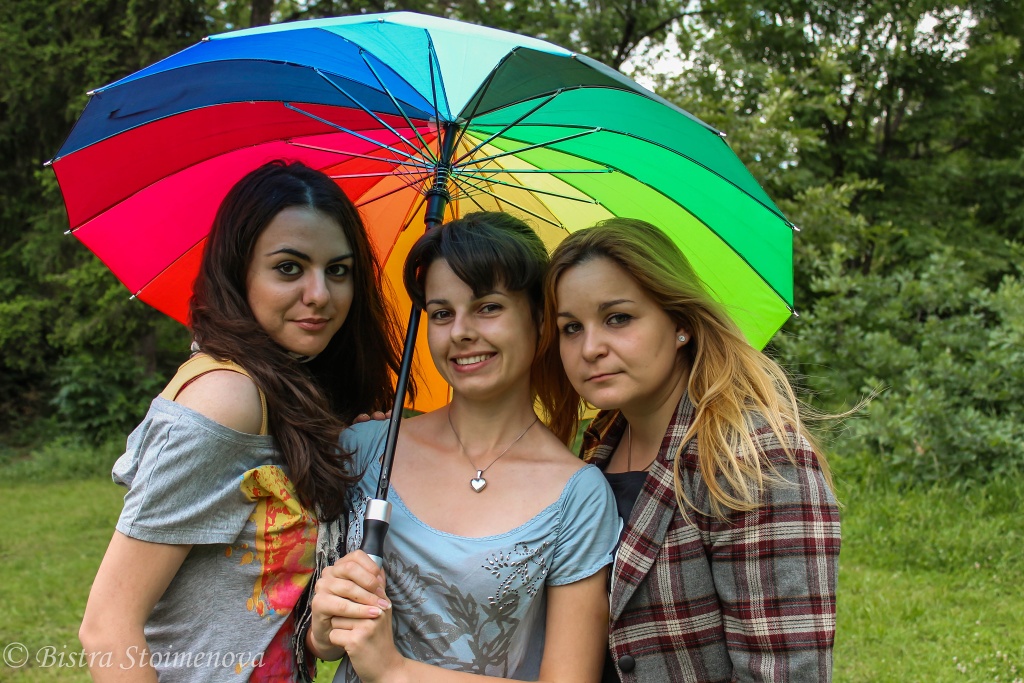
The girls on both images are colleagues of mine from the university - I asked them to make a photo shoot in the park and they were more than happy to come along. The umbrella belongs to one of them, by the way. So the only thing you need to do afterwards is to give the people some of the images - so that they help you out next time.

6. Borrow things - cost depends on how good a friend is the person and how you treat the thing. 

You want to try out that lens or you just need that reflector but you don't have them around? No problem if you know the right people - if you get into some Facebook groups you might find some people that are ahead of you and that are willing to help. You just have to ask - even if they turn you down, you would have tried.

If they give you the object, though, you'll have to treat it well and return it in the condition you got it.

These are not the only ways to improve your work without spending a lot of money. You know - when there's a passion, there's a way! 

понеделник, 6 юни 2016 г.

What drives a photographer mad?

I have no idea what you think but for me there are several things that really piss me off.

Image taken from http://terrywhite.com/how-i-broke-my-d700-by-tethering/


1. The megapixel question.


Number one in my list. I really can't grasp why people somehow conceptualize the megapixels to be equal to good quality photographs. It's the sensor that creates the good quality in a photo and, above all - the person behind the lens. Asking any photographer the megapixel question makes any photographer think that: 

a. You don't know a thing about photography.
b. You don't appreciate their work.


Image taken from http://randolphimages.com/the-megapixel-mania/

2. The gear question

You know,  there is always someone who wants to know 'Is this a professional camera?' as if the can only be photographed by professional gear. God forbid anyone else approach them with something substandard!  An advice - professional is the thing behind the camera - I will keep repeating that. So, don't ask about the gear - if the photographer wants (and believe me,  they LOVE talking about gear)  you'll get the information sooner or later. Asking straight away may insult the person,  as if you are doubting their abilities.


3. 'Is there any Photoshop in that?'

Now this is a painful one. There is no middle ground when it comes to post production. You either use it or you despise it. Problem is that 90% of the photographers use it,  at least 50% overdo it half of the time and there are some 10% -  the vegans of the photographic world - who can ramble for ages about that. I have an opinion but I will share it with you in a different post. Anyway,  unless you want a very long lecture or a scandal - don't ask this question.
Here is an example of what Photoshop can do - and that is a really basic editing you see there

4. 'Is this picture yours?'

As strange as it may sound but you can hear that as well. Let's make it straight - ask that question and the photographer has one more enemy on their kill list. Trust me,  if the picture is not taken by them,  they will tell you immediately. If they don't, the picture is theirs.

5.Copyright

If copyright pops up in the conversation,  just let the photographer talk. If you think that there is nothing wrong in getting a picture from Google images and then reusing it for any purpose,  better keep it to yourself. There is no photographer who thinks that copyright is useless. Believe me,  they have invested quite a lot in every shot they take. So shut up when copyright crops up or you may end up on the photographer's kill list. (again!)
Image taken from http://prophon.org/display.php?bg/новини/121

6. Titles

The title of a shot is another tricky point. If you want to know what the author wanted to say,  ask a literary critic.  What the author wanted,  they showed it on the pic. Nothing more,  nothing less. The title is often chosen to provoke but don't expect profound analysis from the author. They just FELT the title,  they can't put it in words.

7. Giving advice all the time

Ok, no-one says that you should keep silent but if you order the photographer around all the time,  better shut up.  You may have hired them for the job but it is THEM doing it. If you know so much - better do it yourself.


Image taken from http://nickgrantham.com/the-whole-world-is-a-critic/

8. Quoting what another colleague said or did

We,  photographers, are quite egotistical and self-centered creatures. We may admire what someone else did and how they did it but that's just within the guild. Outside it we want to be considered individuals,  unique artists (fill in the list with whatever you want in that line of thinking). Showing what someone does in our face (I talk about we because it's a common opinion) leads us think why didn't you hire them in the first place.

9. 'I can do it better!'

Every once in a while,  there is someone who claims that he can go and do my job better than me. More often than not,  that is a person who has no idea what photography is about and is generally a hater. Problem is that it really gets on my nerves - if you can do it better,  show it, damn it!  A picture is worth a thousand words,  after all. So if you can't prove you're better,  don't try to criticize. You have a 99% chance of getting devastated by the arguments. After all,  they have done that longer than you.

Image taken from https://ethicsalarms.com/2013/07/

10. Bargains

Here we come to the client - customer side of things. I am not saying that you should not bargain but all things should be kept at some reasonable level. I mean,  if you want the person to do a job at a 10th of the regular price,  there is something wrong. Photographers are keen on shooting no matter what. They will just go and photograph the event for free - especially if you know each other in person - you just have to ask. 99% will say YES. But offering a humiliating price (remember - less than one 10th of the regular price) will lead to end of your friendship or any other relationship you had.
Image taken from https://www.tellwut.com/surveys/lifestyle/living/835-price-haggling-bargaining-do-you-negotiate-for-the-best-price-.html

This is not an exhaustive list - I guess I can come up with a ton of other things to say but right now I can think of only those.If you have any other things that drive you mad when you take the camera - share them in a comment below or write to me to add them to a follow-up post.

вторник, 12 април 2016 г.

Lesson 3 - the colour in things - White Balance


Image taken from http://stylopics.com/tag/tumblr-photography/

Welcome to lesson 3 where we are going to let the hardware be and go a bit into software instead. I know you had to wait fro quite a long time to read that and I hope that it's worth the wait.

By now you already know important is to set the correct aperture and shutter speed to get a good exposure in order to get a good shot. Here we are going to talk about another 'minor detail' that can ruin things if you are not careful. That's white balance. 

By now you probably wonder what white balance is and why do we have to care about it. can whiteness can be balanced? Isn't white supposed to be only white? Yes and no. White balance stands for the way your camera sees the light regardless of what you see. It has to do with the computer inside the camera - remember that I mentioned that in the beginning? So that computer processes the shot BEFORE it gets recorded. Thus the light that to us may have no colour gets one in the picture.
So white balance matters -  it's name comes from the way the white colour changes when you adjust the different settings. Most people learn that setting first. Some never get past that post. If you are wondering right now if you have used the feature or not - look below. if any of those icons looks familiar - you already have.

Image taken from http://www.geofflawrence.com/white_balance.html

If you don't know where are they in the camera menu - take a look at the picture below:


When you click there you'll see this:
Image taken from http://blog.uniquephoto.com/quick-tip-how-to-set-custom-white-balance-on-a-canon-dslr/


So - here's the catch - the difference between those is measured in COLOUR TEMPERATURE - usually in degrees Kelvin -  THE SMALLER THE NUMBER THE REDISH IT ALL LOOKS. Check out the table below to see what I mean: 

Image taken from https://romangronkowski.wordpress.com/2014/10/22/white-balance-and-colour-temperature/

So we care about the colour temperature when we take pictures because if we do not select the right one - it will affect the way the whole picture looks like - and exposure will not correct things. Imagine it as an in-built Photoshop that works on your image before you can correct things. If you are not careful - you can get the whole thing wrong.


Image taken from http://www.fotozzoom.com/blog/top-10-photography-mistakes-avoid-beginners/


With some modes and some situations things are OK but sometimes you can get the whole picture looking red or blue or orange, Some photographers use it as a creative device (for example when you shoot a sunset you will want to get it as colourful as possible so you select a mode that would give you rich reds and oranges) but as a rule if you are a novice - TRY TO USE THE MOST NATURAL-LOOKING MODE.  You'll need to switch between modes a bit but in time you'll know what to use when you see the object.

Do you feel knowledgeable already?

петък, 1 април 2016 г.

Welcome spring!

Hello everyone!

Spring is officially here and I am excited - are you as well? I can't wait to start "hunting" down insects with the macro lens or indulge in landscaping somewhere in the country. 


Spring is normally the time that brings us out of the lethargy of the cold winter and fills us with energy to change - ourselves, the garden, the decoration in the living room, the world...

I can't say that I will make some drastic changes in my work but I just hope that I will try to improve things - you know, you can't develop if you don't push your limits. 
Meanwhile - here is a spoiler :)


Wish you a happy and fruitful spring, full of lots of new shots and other exciting adventures! 


събота, 12 март 2016 г.

The photographic license - how the camera changes the behavior

I don't know if you have ever been in such a situation but it happens to me quite often when I get the 'big' 'professional' camera with me and head out shooting. Somehow when people notice you with that equipment, they seem to be more tolerant to what you do and even try to help. I called this 'the photographic license'

Image taken from http://www.picturecorrect.com/tips/what-are-stops-in-digital-camera-settings/ 


If you have studied literature, you probably know that there is such thing called 'the poetic license' that enables the poet to do whatever atrocities they like to the language - use nonce-words, revert word order etc. I discovered that the same (or almost the same) goes for photography.
As if there is something magical in the equipment and for some reason it makes people take you seriously.

I had this case when I wanted to go shooting at the German Weihnachtsmarkt at the center of town. So far so good, but at the moment I had only my old and favourite compact red Canon PowerShot with me. I went no matter what because I felt that I have to - it is a gut feeling. Guess what - I was snapping away but people did everything to make my life hard - got in my way, bumped into me, intruded in the shots or - didn't notice that I exist.

I managed to get some amazing shots that evening - no matter what. The picture below is one of my favourite Christmas pictures ever and maybe one of the best Christmas moments I have ever captured. Unfortunately I never got to know the woman or the child - they went away without even noticing me.
  
The next evening I came back with the 'real' gear - black 'professional' camera and all. Guess what happened? Everyone stepped out of my way, practically no one bumped into me and when people saw me - they backed out of the way and even tried to help me arrange the thing I wanted captured.


I've seen that at travel locations as well - people tend to pay more attention to you when you carry a big, Terminator-like black 'professional' camera than if you carry a compact one - even though you are one and the same person anyway. I will keep writing professional in inverted commas because I think that the professional is the person behind the camera and the equipment alone cannot make you  a pro. That is a topic of another post, however. 

That had me thinking - why does it happen? Why people behave that way? Is it me or is it the gear? 
That led to another question- does my behavior differ when I get the big camera on? 

The answer came one evening on location (Sighisoara, Romania, by the way  - promise to tell it all in a travelogue) and was confirmed when I had to shoot at one or two events. I am generally not a shy person (well, not an introvert, at least) so that came as a shock to me at first. I noticed that the moment I hide behind the lens I become bolder and am willing to do things I would probably never do without the camera in front of me - like asking a complete stranger at a fair to pose for the camera and if you can photography their goods, to walk around a town in the late afternoon when there is no one around and it actually gets scary because the area is so remote and you are a foreign girl 165 centimeters tall. That camera makes me go and hang over a 80-meter bridge or climbing a rickety coast guard viewpoint or go into the bushes and the sand (despite the chance of finding a snake or a scorpion) for the one and only purpose of getting the right shot. 


The viewpoint I was talking about. From that angle you can see that it is not exactly vertical...


An accidental shot I took while almost falling off the viewpoint. Turned out that it is not used for a reason. Saw that picture wile flipping through the photos at home.
But there came another question - I did the same when I had a smaller camera. Why didn't people take me seriously then? The answer, I guess, lies in the gear. The bigger and scary/professional -looking it is, the more people start thinking 'Hey, look at her - she MUST be a pro, let's get out of the way!' or if they don't like getting photographed 'Oh, is that a photographer over there? She must be - look at her camera and stuff... I must get out of here before she takes a picture of me!'

So, in a way, people do license you with their behavior and you are free to act as you like. I normally use the moment to get better access to the location - if that is possible - or to get a photo of someone or something I like. When I have a camera in hand I am prepared to do almost any kind of idiocy to get the right shot. (and believe me - I have a few idiotic stories to tell come to think of it). With a camera in hand, there are no language barriers.  

So, what do you think?
Is there a photographic license and does holding a camera change you or the people around you?