Показват се публикациите с етикет people. Показване на всички публикации

сряда, 5 април 2017 г.

Street photography guide for dummies :)


Hello everyone!

I know it's been quite a while since I wrote but I've been up to quite a lot these days (and months) so I have an excuse.

Welcome to the newest part of Shoot Like a Pro - Advanced, Hope you'll like it.

I guess from time to time each one of us wants to take a few street shots - because we have some spare time but lack the money to travel somewhere far away or just because we want to try out our hand at street photography.


In its essence, street shooting is the easiest and the most difficult genre. It's difficult because you need to have a keen eye and to know when to shoot and when not to do it. It's easy because you document real life events and you just need to keep you eyes and ears open.


So far so good, but what are the basics?

I'm by no means an expert but here are a few tips and tricks - I'll use my most recent street shoot from my home town - Sofia, in winter as an illustration.

Rule 1 - know your geography


You simply CANNOT go out shooting without knowing what is where around town. This includes knowing not only where to go but where you should NEVER go. You see, photo equipment is too expensive to risk it for nothing. Besides, if you are a 5-feet-tall girl like me, you'll think twice before going out to the ghetto.

So step one is to see what is available and if you'll be able to access the place in a safe time of the day. The picture above is from a place called Lavov Most (literal translation for that would be Lion's bridge). It's a really picturesque place BUT in recent years it's a gathering place for illegal immigrants (called refugees by the West). It's absolutely NOT safe to be here after dark and I know it because I did my homework to check.

In the pic you see only ordinary people because it was too cold (-15 Celsius) for anyone else to go out wait for whatever.

The location check includes knowing when to be around places and when you'll get the best lighting and/or subjects.


This a picture of the famous mosque in Sofia (built by the architect Sinan back in the 16th century and still currently in use.) - and it's NOT a Friday - so I can roam around and take as many pictures as I want.

Rule 2 - try to stay unnoticed


As you can see from the pictures above - when heading out for street shots, I include people in the frame. Key to that is to AVOID getting noticed. I understand that it's not an easy task if you carry a two-kilo black camera BUT in Eastern Europe people hate being photographed without permission. You can get into a big trouble if they notice you and you keep taking pictures without their consent, you can end up in the police station.

The picture above shows a woman staring at the flag in front of the monument of the unknown (nameless) warrior (the brick building is an ancient basilica). I caught this woman by pure accident, don't even know if she was specifically looking at the flag but the image looks really dramatic. So if I had asked her to pose for me, she may have send me to hell (as some people would) or posed those artificial 'duck-face' poses I totally hate. So instead, I took a picture that doesn't show her face (which means that I can use it without her written consent, at least for non-commercial purposes).

When people don't notice you are there, you can capture a lot more candid moments than if you go around and try them to pose for you. There are photographers that can approach anyone and get the perfect posed shot - well, I'm not exactly one of them. I prefer to play the paparazzi game.

Rule 3 - Watch out for traffic


It may seem something obvious but believe me, when you start shooting, you easily forget that there other people (or cars) around you.

This building used to be the palace of the Tsar but in 1944 it was taken over by the Communists. It was built by an Austrian architect and used to have an ornate fence and gate - just like those of Belvedere palace in Vienna. The fence used to be cutting in two the street you see in the foreground but it was demolished in 1945. They had plans to destroy the building too but firstly they ran out of money and secondly some brainy people thought that it won't be a good idea. Now the building is an art gallery but nothing shows from the royal period - the place was completely robbed - the only evidence are the stone fireplaces (which are still there because they couldn't remove them).

It has a really interesting story and is one of the most photogenic places in Sofia. Only problem is that it;s located on one of the busiest boulevards in the city.

So when it comes to traffic - or anything else while you're out shooting YOUR SAFETY IS ALWAYS FIRST! No image is worth getting yourself in danger! First ensure that all other vehicles can SEE where you are and LOOK AROUND BEFORE you try to make a hasty move.

For this shot I stood on the outside line of the boulevard and had to wait for the right moment when cars were on red light :) If you have to stand somewhere on the road - STICK TO THE SIDES OR STAY IN THE MIDDLE.

DON'T MOVE BACK AND FORTH, YOU CAN GET HIT!

Rule 4 - learn a bit about the place you are shooting

Street photography is often about telling a story so take some time to learn a bit about it. Each city has enthusiasts that write about its history, you'll just have to check things out.

For example, this place (on the pic above) has a really dramatic story - my grandfather was a witness to most of it:

The place is called the triangle of power in Sofia - the building of the Presidency (to the left) and the Council of Ministers (center and left). This place has a long standing controversial history. When Communism came in 1944, the new authorities were dead set on establishing a new order. So they demolished a whole district - the so-called Targovska street (where all trade and artistry in old Sofia happened) and the other lanes around it.

In the 1950s, when they started digging the foundations for these buildings, they reached the Roman stratum of Serdica - namely the palace of Konstantine the Great. And they poured concrete on it. Because no one can be greater than the Soviet Union. Now these stand as a reminder of a totalitarian regime and of stupidity.

If you don't know what was destroyed to get these created, you might even marvel at them. So if you want to show the idiocy of the people who created the ensemble you'll need to know the story behind the place.

Rule 5 - marvel at the architecture


Street photography is often about the architecture around is. We just can't escape that - we are surrounded by it so why not trying to capture it the best way possible.

The building you see is the National Theatre Ivan Vasov which dates back to the end of the 19th century and is one of the most beautiful buildings in Sofia.

So don't try to shoot people only - keep your eyes open for the things around you.

Rule 6 - dress according to the season!!!


I should have said this in the beginning but I thought it's too obvious. Anyway, I must add this.

ALWAYS DRESS ACCORDING TO SEASON - during this photo shoot I had to wade through knee-deep snow, endured a blizzard (but I was already out so I decided to keep moving) and my hands almost froze on the camera (because, I repeat, it was -15 degrees Celsius). So I was lucky i had sturdy boots and warm coat and gloves, and a hat.

You never know what might happen so it's better to take an extra item (like spare gloves or an umbrella) instead of getting back home soaking wet or ice cube frozen :) Big cities have a few disadvantages - it takes a long time to travel in them and the weather may vary, so you can't know for sure what the weather would be at the other end.


Rule 7 - be quick with the camera

The picture above - of the guy with the red coat - is a great example for something other than warm clothes in winter. I saw him for a few moments right as he was walking towards me. It was freezing cold and to top it all - the wind was blowing snow in my face. So I was kinda reluctant to shoot but then when he came closer I decided that I just CANNOT MISS THAT SHOT. It turned out to be one of the best from the series. so I'm glad I took it. I was also lucky that it was so cold so I didn't get noticed.

So keep your eyes open and shoot everything you can - better to come home with more images than you need than to miss a one-timer.

Rule 8 - general photography rules apply here as well


If you are into street photography, you are probably familiar with all the general photography rules - like the Rule of Thirds and the like. BUT when we are out shooting and all we see is people, we tend to forget that the same basic rules can be applied here.

As you can see above, the lead-in lines help create a sense of depth and scale.

So don't underestimate the rules :) They are old but gold :)

Conclusion

I think I said it all - so all I can say here is "Good luck" and happy snapping.

If you think I missed something - write to me and I'll include it in a second post :)

вторник, 27 септември 2016 г.

Crete - Chasing the Minoans - part one - Piraeus


The story I'm going to tell you, dear Reader, takes place in the long past (or not so much) 2009.

The month is September, the destination - Crete. Why Crete? Because I am the person who drags people around to excavations - stones, stones everywhere, walls around 20 centimeters tall and things like that. And no, I'm not an archaeologist. I am a culturologist (but that is subject of another discussion and it has nothing to do with travelogues. Besides, it wasn't in the itinerary in 2009). Back to the point - we're going to Crete.

This travelogue is a translation from the original Bulgarian text I wrote for the site patepis.com. I'm writing it in case you wonder why it differs from my previous works - this is a story that happened BEFORE I became a photographer. I was 17 then. 


The original story (published in Bulgarian) can be found here:

http://patepis.com/?p=68117


To be honest, at that time Crete seemed to me as exotic as Bora Bora. And generally as far away from home as it, for that matter... So we start wondering how to get there (to Crete, I mean, not to Bora Bora) - 2000 kilometers are 2000 kilometers everywhere.

My father plays the adamant - "I'm not going anywhere without my horse!“
– so things become clear - there will be driving. Which means HE will drive because neither me not my mother has a driver's license… Still, Crete is an island i.e. surrounded by water so we somehow cannot swim our way to it… Hence we're gonna use the most exotic option - namely - the ferry.

No problem in that. We hit the road a day earlier (because none of use is particularly fond of getting up at 4 a.m. so that we make it for the ferry), we sleep in Gotse Delchev (a town near the Greek border) and we cross the border with the crack of dawn and around 9 a.m we're down the road after Exohi (the Greek village that's given the name to the border check point.)


О tax, O toll – how to be mistaken for a Greek without knowing the language…


There are no vignettes in Greece. But each 50 kilometers or so you have to pay a toll tax. Money can vary depending on the distance - somewhere you'll pay 1 euro, at other places tax rises to 2 or 3 euro. The whole journey costs around 30 euro (now it's more because there are toll stations down Egnatia - the highway that connects Thessaloníki and Kavala, while in 2009 the highway was brand new and there were none). What's interesting, however, is not the pricing but the conversations we have with the people at the toll stations…

We stop at the first one. There is a car in front of us - they drive on, we count the money for the tax.

Kalimera! (Good morning/ Good day in Greek) – says the lady from the booth
Kalimera! – I respond from the back seat – I've bought a Greek textbook less than two weeks ago and I'm not afraid to use it.
Evharisto! – she thanks us.
Parakalo! (you're welcome) – I answer again because my father doesn't.
Kalo taksidi! (have a nice trip) – she says, hands us the receipt and we move further.
I'm very pleased with the short conversation and I don't even think out why, actually, she addressed us in Greek while our car is with foreign registration plates. Same thing happens at the other toll stations - around the forth my father learns the words and starts answering the cashiers himself.

Somewhere just before Athens one lady looks absolutely confused and babbles something in Greek from which I make out only the word 'lepta'. While I'm figuring out that she she doesn't have enough money for the change and asks us if we have some cents (lepta means coins in Greek), we have sorted it out in English. Across (in the booth) we hear laughter and the woman hands us the change with a huge smile wishes us a nice trip, in English, this time.

While we drive on, we laugh our heads off, because here (and in the previous toll stations) they obviously took us for natives - for Greeks… While we joke about having some Byzantine descent we enter the outskirts of Athens…

A surprise is waiting for us there - a traffic jam so big that my father starts oozing saliva as if he's rabid. How could he not - a highway with 4 or 5 lanes in each direction and each and every one is jammed with cars as far as the eye could see. My father really wants to get off the highway and drive along the narrower streets of Athens so there is a big battle in keeping him in the middle of the highway (if he gets off it, we'll roam the streets of Athens forever). The time is around 4.30 p.m., the ferry leaves at 9 (if we actually buy tickets for it). So we have plenty of time…

We sit and wait in the traffic jam when the side window of the car next to us opens and a man starts shouting:

Apo pia to Markopulo? – he repeats but he's chosen the wrong car. My mother shrugs to show without words that she doesn't understand him. He for some reason decides that we didn't hear him and repeats the phrase. I start shuffling the pages of the textbook and it dawns on me…
Den xero elinika! (I don't speak Greek) - I yell a few times out of the window to make him hear me. He does on the third time and starts laughing his head off - the driver literally fell of the steering wheel.

The car passes by and a few hundred meters we find out what's so funny.  There is a road sign for that Markopulo, which turns out to be a town near Athens where they make the famous Retsina wine. The guy took us for natives and decided to ask - since the cars were side by side in the traffic jam – but he chose the wrong people.


The Greek alphabet - or how to read your road signs…


In case you don't know, my dear Reader, Greeks write in Greek. Which has nothing to do with ANY other language in the world. Their alphabet looks a bit like the Bulgarian one but similarities end here. Most road signs in Greece are... in Greek. So far, so good, but even the signs that should be in English are actually in Greek.

We have to take the ferry so we need Piraeus - the port of  Athens. Actually Piraeus was once an independent city but the megalopolis grew and now they are one whole. So we're looking for a road sign for Piraeus but we see nothing. Absolutely nothing. The roadsigns on Greek highways are huge but the names don't ring any bells…

At some point an alien name appears. It says PEIRAIAS. Great but what's this? It should be in English but it doesn't sound English. I feel as proud as if I've discovered America when I discover the reading rules of Greek (in that sacred textbook of mine). It turns out that the combination of the letters EI is read as I, and AI as Е. After I've broken the code it turns out that what I'm reading as PEIRAIAS, Greeks read as PIREAS. Eurica! So the sign is for Pireaus! We drive that way.


How to board a ferry - a few DON'Ts


After a few minutes' drive - again in that traffic jam, it was rush hour – we arrive at Piraeus. It turns out that it's not that easy to board a ship though - not like going to a Bulgarian port and jumping in the first boat you lay your eyes on. I thought, to be totally honest, that I'd see something resembling the Radezky ship ( very famous ship from the 19th century connected to Bulgarian history - now a tourist attraction), my father - of the ferry that goes from Thassos to Keramoti (or as he says 'bath tub'). My mother smiles but keeps silent.

The port of Piraeus is HUGE - to find your ship you have to find your gate - and they are all coded - each destination has a letter code and depending on where you're going, you can end up at either side of the port. We find our gate - for Crete - and my jaw drops.

Ships, ships everywhere!!!


Another ship waiting for passengers - for Crete too, probably - at the same gate. Shot taken from the top deck of our ship. Around the time I took the image, most ships at this gate are already gone and that's why it looks so empty (and you can see these great reflections). Otherwise ships are jammed like sardines.


They are so  many and so big that it looks a bit scary! Which one is our ship, though? We get in and we stay at the gate - i.e. at the parking across the parked ships. There are no road signs so my father parks as he pleases and my mother gets off to buy tickets. Two minutes later a truck appears from somewhere and starts circling us. The driver is out of the window to see the idiot who plays a parking bollard.

Less than two minutes later another truck appears and goes around from the other side. I notice that drivers hand in some really long sheets of paper to a man ten meters away and point angry in our direction. The man in police uniform notices our foreign registration plate - which means bushmen who are foreign to all kinds of ports - and send out his younger colleague to talk to us, to save face before the foreign tourists. After a few torturous minutes we sort out that we don't speak Greek and she speaks very little English so we use very simplified and accented English garnished with a lot of gestures to understand that we are a traffic problem, where we're standing.

Another ferry - not ours - for Crete. Notice how big these ships are - you can see a few trucks lining in to get inside to add scale to the whole image. I must point out that these ships are small compared to the big cruse 'monsters' which wait for passengers at the other end of Piraeus - they have 30+ decks. For comparison - our ship has only 8 of which 2 or 3 are garage decks. Embarkation of cars and trucks is a complicated and highly responsible task. The guy with the radio has a MAP of the cargo - which means how many vehicles of which type can be put where. This map is strictly used each time the ship stops at a port. During the voyage, the garage is locked and the vehicles are chained to the floor - you can get when the ship arrives by the noise you can hear from below (where the garage decks are) - you can hear clinking of chains - that means they free the cars and disembarkation begins soon. On this picture you can see the entrance for cars and trucks.

My father moves the car and we park next to the altar of Agios Nikolaos (St. Nicolas) - after all, we are at a port, it's normal to have a temple of the guardian of sailors and fishermen so I shoot a quick wordless prayer at the saint, you never know what the vessel would be embarking… My mother gets back with the tickets - three for us, one for the car - and we start wondering which one is our ship. A piece of cake for me. The name of one of the ships nearby is KRITI so I decide that it should be going to Crete. How many ships can be leaving at the same time for that island??? My mother goes there.

The guy with the radio looks at the tickets and then tells her that she has to board another ship, not this one. It turns out that apart from our names, the name of the ship is also on the ticket. But who would bother to read that…

A bit of information about the ship


After we board the ship and we're given a cabin - after all the drive from Gotse Delchev is a long one and we'll have to get up very early the next morning to drive again, we have to sleep somewhere.

Most Bulgarians imagine a ship like a платноходка or in my case - as the Radezky ship I told you about earlier. Ferries, however (here I mean the big ones for long distances not those small for Thassos) are much bigger and way different.

Our ship boasts with 8 decks - 2 or 3 are for the garage (cars and trucks are parked down there like a puzzle and ordered around by that guy with the radio - each ship has one like him), the rest are filled with cabins. Each deck has a MAP on which you can see where you are and which cabin numbers are around - like in a hotel.

To us (my father and me, because my mother knows where she's going) its' a jaw-dropper from the moment we get off the car. For the record, they give us parking advice (cars should be parked less than 20 centimeters away from one another so that they don't move around while we're sailing) in Bulgarian. I guess someone in the garage has worked on the Keramoti-Thassos ferry (where most of the tourists come from Bulgaria) before he came to Piraeus.

From the garage we take an ELEVATOR which takes us to reception deck - deck 7. There we meet a  who escorts us to our cabin (after we got the card that opens it at reception) and shows us how to put down the beds and how to operate the air conditioner.

Have you ever watched the TV series 'Das Traumschiff, dear Reader?

Well, this ship (the ferry) is bigger (more decks) and newer (way newer)! On reception deck you can find shops, even a параклис and a few restaurants. They open half an hour before departure and close around 11 p.m. (when you arrive at 5 a.m., that's normal).

The top deck is for those who decided that they don't need a cabin - there are a lot of benches and the Giros (Greek style )and drink booth works 24/7. On board you can find a bit for each taste.

The top deck is crowded, mostly with Greeks who don't share in our nostalgia towards the continent - for most of them, taking the ferry is like taking the bus. They surf the net on their laptops (that was in the ancient times where smart phones were not yet invented), talk on the phone or just sleep and wait for the ship to go. The funniest thing of all is that they are not in the least impressed of the fact that they are moving on water instead of land. But as my father says, Greeks are born on their ships…

Our cabin is equipped as a hotel room - we have towels, glasses and all other things that a tired traveler might need. The fact that we are no a ship shows in two things - the narrow space (we took a windowless cabin, we'll be traveling at night) and the life jackets in the wardrobe. The air conditioner works non-stop and maintains a relatively low temperature - you need some kind of ventilation - but the people are kind and they've left us some blankets.


Inside the cabin, apart from the 4 beds, a TV and a bathroom you can find a wardrobe. Full of life jackets. The stairs are used to get on the upper beds. 

We get a drink - after all that adventure, who would say 'no' to a drink - and then we get out to say 'Goodbye' to the continent and to set off for the far away Cretan land.
Piraeus at departure - the ship has already started and I take a picture of the land. The ship is led by a small boat of the coast guard. They are the boss of the port in some way - they say which ship leaves when and without them, no one can move around the port.
In the next post you'll find out why people (the Dutch in particular) invented Booking.com. 

вторник, 19 юли 2016 г.

Lesson 2 - Shooting on a budget

If you love photography but you cannot afford to buy all the gear,  here is something that might help. I've tried most of the things so I will try to show in practice how some of the things work.
Image taken from http://addicted2success.com/success-advice/9-ways-you-can-make-money-online-with-photography/

I know you've been waiting for quite a while to get this but it's been a busy time. So I hope you like this one. 


Before we start - a disclaimer. 

If you are not prepared to invest in photography,  better find another hobby that speaks to you. It's not only money we're talking about - it's time, passion,  creativity. You can come up with amazing images using any gear,  it just takes some tweaking and more time to get the good results.


1. Keep your compact camera - cost 0€/£/$


What many people do after they buy their first DSLR is sell away the good old compact camera they have used before. My advice is - keep it!  Not only because it has served you well and doesn't deserve to be thrown away. You know how it functions and you know how to use it.
I will really try not to compare a compact camera and a DSLR but I can't help listing a few things. If you want to read the whole comparison - click here.

Even though the quality of compact camera shots cannot match the editing capacity of the ones produced by a DSLR, if you know what you're doing,  few would be able to tell the difference.  

Besides,  compact cameras (especially if they are equipped with good optical zoom) can be a good replacement for almost any lens you lack.  
One of my best images from Pisa - shot with a compact camera I still keep in my bag
A compact can give you the necessary zoom if you don't have a telephoto lens or it can give you the closeup you need to get that bee in shot without a macro lens. 
Compacts have one big advantage to DSLRs - well,  maybe except mirrorless cameras but judging by the amount of money they cost - no thanks - the size.  A compact is ideal if you need a video and don't have a tripod or if you need that amazing moment captured without drawing too much attention.

This wonderful view of some greenhouses was shot from a moving car - the compact enabled me to shoot handheld without needing that much firm and steady ground (because as you know roads are not always totally smooth) 
I managed to snap this street artist only because I used a compact and he didn't notice me.

Another shot from the compact - then toned on the computer
The best thing is that you don't need to pay a single coin for it - you already have it at your fingertips.  The only problem is that you'll need some time and patience to get the great results that would have taken you a few seconds with a dedicated lens.


2. Extenders and filters - cost around 200 €/£/$


You will need to pay a bit here - not much though. Extenders are those lovely things that make your kit lens a macro or (frankly I don't know what else but I'm sure that there are other options). 
As for filters - the biggest advantage is that they protect the lens from dust,  dirt,  water and - if you pay a bit more for a good quality one - from hits and falls.
One of my favourite images and actually a bestseller is shot with macro filters 
I almost always use this image as an illustration but it's just so good for this that I can't resist this time. Here the point is that it was really light around the waterfall - the ND 8 filter enabled me to use slow shutter speed - around 1/20 or less (can't remember right now) and so I achieved the blurry flowing water. Unfortunately, I didn't have a tripod so that's as slow as I could go.
A filter can transform the image and it's lightweight and cheap. You can,  of course add it in post-production but it's better to have it.


3. Colored and white paper ( and some colored clothing) - the ideal background for objects and food - cost around 50 €/£/$ (with some clothes included)


That one is shot on a blouse - I've never worn it, by the way, but it turned out to be perfect for object photography
Women are quite rich in clothes they have bought and never worn or worn only once and you can find white paper for printers in almost any house.  It may sound odd but these are perfect if you want to imitate a studio setting and you don't have the money to hire one or buy the expensive professional backgrounds.  
This one is taken on a wooden board 

Looks really nice, doesn't it - well, originally it is pijamas

Of course,  you'll need to tweak a corner or two on the computer but it would be worth it.  
Truth be told,  some of my best pictures are created with clothes for backdrop.


4. Use your house - cost 0€/£/$ 

You don't need a fancy studio to get amazing shots. Yes, you do some space but you already HAVE space - your home. No matter how big or small it is, you have a clean wall (or a big wardrobe), a window and a table. If you want to learn the basics of studio photography, that's all you need. After all, the hardest light to master is the sun. 

This one is made on a chair in the kitchen - all props coming directly from the kitchen - and using the only light available - the sun from the window


5. Ask friends for help - cost 0-10€/£/$ 

There's no need to do everything yourself. Tell others about your passion and they'll be more than willing to help. Props, space, advice about the best places to visit, even models - everyone can help with something. Most of them will do it even if you don't ask for help straight away. So don't be shy - it will be worth it. Besides, once you tell more people, you'll get more exposure. 

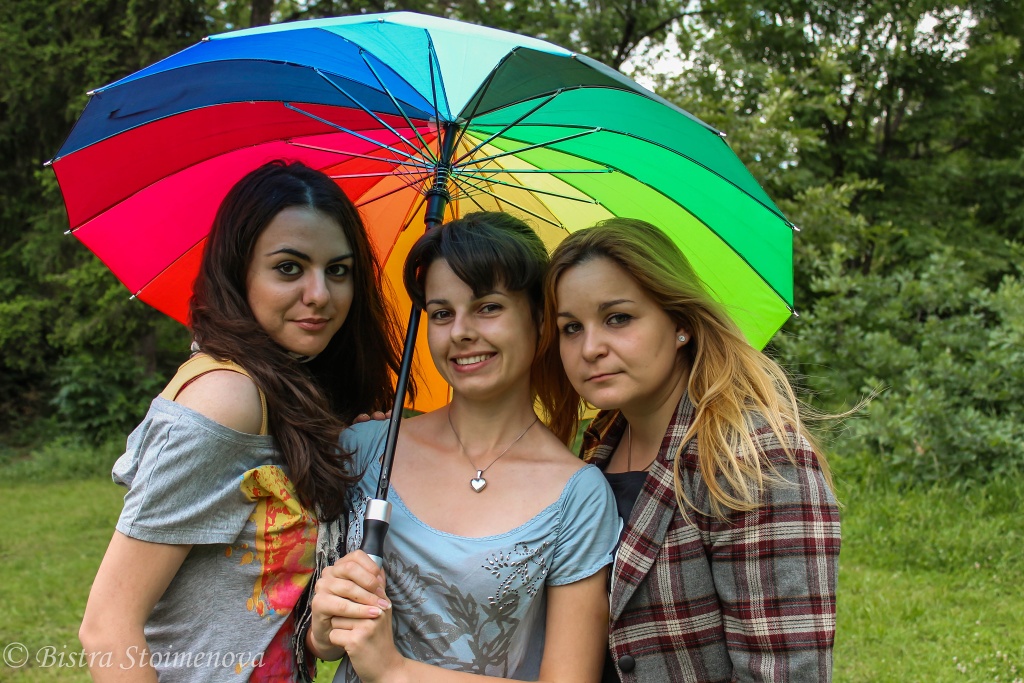
The girls on both images are colleagues of mine from the university - I asked them to make a photo shoot in the park and they were more than happy to come along. The umbrella belongs to one of them, by the way. So the only thing you need to do afterwards is to give the people some of the images - so that they help you out next time.

6. Borrow things - cost depends on how good a friend is the person and how you treat the thing. 

You want to try out that lens or you just need that reflector but you don't have them around? No problem if you know the right people - if you get into some Facebook groups you might find some people that are ahead of you and that are willing to help. You just have to ask - even if they turn you down, you would have tried.

If they give you the object, though, you'll have to treat it well and return it in the condition you got it.

These are not the only ways to improve your work without spending a lot of money. You know - when there's a passion, there's a way! 

понеделник, 6 юни 2016 г.

What drives a photographer mad?

I have no idea what you think but for me there are several things that really piss me off.

Image taken from http://terrywhite.com/how-i-broke-my-d700-by-tethering/


1. The megapixel question.


Number one in my list. I really can't grasp why people somehow conceptualize the megapixels to be equal to good quality photographs. It's the sensor that creates the good quality in a photo and, above all - the person behind the lens. Asking any photographer the megapixel question makes any photographer think that: 

a. You don't know a thing about photography.
b. You don't appreciate their work.


Image taken from http://randolphimages.com/the-megapixel-mania/

2. The gear question

You know,  there is always someone who wants to know 'Is this a professional camera?' as if the can only be photographed by professional gear. God forbid anyone else approach them with something substandard!  An advice - professional is the thing behind the camera - I will keep repeating that. So, don't ask about the gear - if the photographer wants (and believe me,  they LOVE talking about gear)  you'll get the information sooner or later. Asking straight away may insult the person,  as if you are doubting their abilities.


3. 'Is there any Photoshop in that?'

Now this is a painful one. There is no middle ground when it comes to post production. You either use it or you despise it. Problem is that 90% of the photographers use it,  at least 50% overdo it half of the time and there are some 10% -  the vegans of the photographic world - who can ramble for ages about that. I have an opinion but I will share it with you in a different post. Anyway,  unless you want a very long lecture or a scandal - don't ask this question.
Here is an example of what Photoshop can do - and that is a really basic editing you see there

4. 'Is this picture yours?'

As strange as it may sound but you can hear that as well. Let's make it straight - ask that question and the photographer has one more enemy on their kill list. Trust me,  if the picture is not taken by them,  they will tell you immediately. If they don't, the picture is theirs.

5.Copyright

If copyright pops up in the conversation,  just let the photographer talk. If you think that there is nothing wrong in getting a picture from Google images and then reusing it for any purpose,  better keep it to yourself. There is no photographer who thinks that copyright is useless. Believe me,  they have invested quite a lot in every shot they take. So shut up when copyright crops up or you may end up on the photographer's kill list. (again!)
Image taken from http://prophon.org/display.php?bg/новини/121

6. Titles

The title of a shot is another tricky point. If you want to know what the author wanted to say,  ask a literary critic.  What the author wanted,  they showed it on the pic. Nothing more,  nothing less. The title is often chosen to provoke but don't expect profound analysis from the author. They just FELT the title,  they can't put it in words.

7. Giving advice all the time

Ok, no-one says that you should keep silent but if you order the photographer around all the time,  better shut up.  You may have hired them for the job but it is THEM doing it. If you know so much - better do it yourself.


Image taken from http://nickgrantham.com/the-whole-world-is-a-critic/

8. Quoting what another colleague said or did

We,  photographers, are quite egotistical and self-centered creatures. We may admire what someone else did and how they did it but that's just within the guild. Outside it we want to be considered individuals,  unique artists (fill in the list with whatever you want in that line of thinking). Showing what someone does in our face (I talk about we because it's a common opinion) leads us think why didn't you hire them in the first place.

9. 'I can do it better!'

Every once in a while,  there is someone who claims that he can go and do my job better than me. More often than not,  that is a person who has no idea what photography is about and is generally a hater. Problem is that it really gets on my nerves - if you can do it better,  show it, damn it!  A picture is worth a thousand words,  after all. So if you can't prove you're better,  don't try to criticize. You have a 99% chance of getting devastated by the arguments. After all,  they have done that longer than you.

Image taken from https://ethicsalarms.com/2013/07/

10. Bargains

Here we come to the client - customer side of things. I am not saying that you should not bargain but all things should be kept at some reasonable level. I mean,  if you want the person to do a job at a 10th of the regular price,  there is something wrong. Photographers are keen on shooting no matter what. They will just go and photograph the event for free - especially if you know each other in person - you just have to ask. 99% will say YES. But offering a humiliating price (remember - less than one 10th of the regular price) will lead to end of your friendship or any other relationship you had.
Image taken from https://www.tellwut.com/surveys/lifestyle/living/835-price-haggling-bargaining-do-you-negotiate-for-the-best-price-.html

This is not an exhaustive list - I guess I can come up with a ton of other things to say but right now I can think of only those.If you have any other things that drive you mad when you take the camera - share them in a comment below or write to me to add them to a follow-up post.